Adventure, Kefir: My Love of Coconut Kefir and How To …

Photobucket - Video and Image Hosting

*

Ahhh…Put de lime in de coco-nut and drink it all up ;)  I like some lemon-lime and/or ginger in mine occasionally, but, to be honest, I like it best straight :) It’s a soury taste, so sweetening it up with some stevia and fruit may help a newcomer. It’s just too good for you not to! Read previous post on why I drink it and why you should. (I drank much of the kefir by the time I took that pic, by the way; so, yes, there was more ;) )

Okay, a lot less talk and more pics! They tell the story, afterall. Let’s get to it!!

Start with — surprise! Coconuts! FRESH young Thai coconuts are recommended:

Photobucket - Video and Image Hosting

I scored on these organic Thai coconuts — only $1.99 each…

Photobucket - Video and Image Hosting

Now, crack those suckers! Okay, don’t worry. It’s really easy peasy…
With a sturdy knife, slice off the spike top…

Photobucket - Video and Image Hosting

Shave the sides a bit — just the top; no need to undress it completely ;) — to reveal the hard shell underneath…
Photobucket - Video and Image Hosting

With a whack of the knife on the top-side, create an opening like so (ignore the mess I made of the sides) …

Photobucket - Video and Image Hosting

Wedge the knife in the slit and as to pry it open, wiggle it up and down to crack it further; it naturally creates lid in a nice little circle to remove easily …

Photobucket - Video and Image Hosting

An alternative way — I like because there’s less chance of me spilling that precious water — is, after slicing off the pointed top, to poke a hole in the top with the point of your knife for ease of draining…

Photobucket - Video and Image Hosting

You shouldn’t need a hammer to whack with like you do with the harder, mature, brown coconuts; it should be very soft….

Photobucket - Video and Image Hosting

Or simply drain from the crack you made on the side.

Then you can deal with the coconut meat later by whacking the lid off completely…

Photobucket - Video and Image Hosting

Okay, so drain the water over a sterilized fine-mesh strainer or new double-layer piece of cheesecloth into a clean, sterilized receptacle (boil a mason jar in hot water as for canning; or you can pour boiling water over it and in it. Make sure you warm up the glass first or that it’s not cold; it may shatter if not a thick glass):

Photobucket - Video and Image Hosting

Photobucket - Video and Image Hosting

Photobucket - Video and Image Hosting

Photobucket - Video and Image Hosting

Photobucket - Video and Image Hosting

Okay, this is the water from 2:

Photobucket - Video and Image Hosting

You want about 1 1/2 quarts of water to 1 package of kefir starter — Purchase from  Wilderness Family; it comes with instructions or you can follow them right on their site.

Utensils: A large jug with an air-tight lid; a sauce pan or double boiler; kefir starter (also need a fine-mesh strainer or piece of cheese cloth. If neither, try an unbleached coffee filter found in any market or tea filters like these will work; and an inexpensive kitchen temperature gauge, found at any market, if you have one is great):

Photobucket - Video and Image Hosting

Warm the coconut water GENTLY to 90 to 92-degrees, only. Use a temperature gauge or use your finger to “just warm”; better not warm enough than too hot. It should work at lower temps, but you will “kill” it any higher.

Then add your starter to to the clean, sterilized storing receptacle ….

Photobucket - Video and Image Hosting

Pour in the warmed coconut water and shake a bit. I don’t like to add any instruments to stir to avoid any contamination:

Photobucket - Video and Image Hosting

I got these great air-tight 2-litre jugs by Bormioli Rocco of Italy at Sur La Table for only $6 each! I got 1.5-litre jugs for $5. This brand is a real bargain; I also have their glass pitchers. They have lots of variety to offer and jugs like these in various sizes. Love them! They are also available in many regular and discount stores; web sites; and Amazon — and always, unexpectedly, inexpensive. They aren’t “cheapy” at all; the Bormioli Rocco is very good-quality; and the $5-price was at Sur La Table! Not exactly an inexpensive store…Always preferred, however, is recycled, if I can find it. I recall Ikea used to have lots of recycled glass; however, I haven’t been there in a long time. I do see they have these at — if correct — incredibly low prices! Not recycled; Available only in stores, it reads.

Photobucket - Video and Image Hosting

Seal tightly and set aside, undisturbed for 24 hours — That’s it!

Photobucket - Video and Image Hosting

Taste test. If it’s flat, too sweet-ish ( it should have a bit of sweetness), or is not tangy then re-seal and let it go another six hours. Check. Let it go up to 48 hours, checking at 6-hour intervals. Most of this relies on the temperature at which it is stored. I would throw it out if not done by 48 hours. This time range gives you an idea when to start making your next batch so you don’t have any days going without. Be aware, also, that one packet of the kefir is usable 7 times! So that makes it even more inexpensive. also note that the kefirs following the first batch are done faster — so, usually within 24 hours, possible sooner. You only need to reserve 1/4 Cup of your initial batch of kefir to “start” your next batch, as opposed to adding a new packet of kefir; you can do this up to 7 times.

Should let out a nice hiss from the pressure build up when you first open it, and it should have a bit of a fizz…thing about the fizz is that sometimes it’s more fizzy-ish like a carbonation; other times, it’s very very light. Either way is fine from what I understand, and, for me, drinking either way has been the same experience, effectiveness-wise. Also, the more often you open it, the more the “pop” and carbonation diminishes, just like any carbonated drink; it’s still all good ;)

Here it is at about 18 hours. It’s gone from clear to cloudy, creamy white….

Photobucket - Video and Image Hosting

Photobucket - Video and Image Hosting

Not much difference looks-wise at 24 hours; however the taste wasn’t quite right…

Photobucket - Video and Image Hosting

Some difference looks-wise, at 36 hours; it’s got more “culture” on top — FINI! :^)

Photobucket - Video and Image Hosting

So there it is! Easy, no? Your own coconut kefir!! Yummy. Drink often :D Several places recommend that first thing in the morning on an empty stomach and just before bed as being the best times; so if you can’t drink before a meal or between meals, at least drink in the a.m. and p.m.

Now, to all that coconut meat: Scoop out the meat, which, in Thai coconuts is soft and silky and spoonable!

Photobucket - Video and Image Hosting

Photobucket - Video and Image Hosting

Even a child could do this…

Photobucket - Video and Image Hosting

Photobucket - Video and Image Hosting

Photobucket - Video and Image Hosting

Easy…. You can do any number of things with coconut meat. Add to smoothies; make coconut milk (you can also add coconut to your regular nut, seed, or soy milks for added richness instead of pure coconut milk); FREEZE! I freeze in portions as use as I do seeds and nuts, mostly for dressing. GREAT in raw food recipes. Use in place of dairy cream; half-and-half; or milk. Makes the best base for icecreams, cooked or raw (better than soymilk); Use to make “cream” soups, creamy pasta or other sauces. My favorite way is to ground it finely with some nutritional yeast and make a “parmesan” sprinkle — DE-licious. Add to trail-mixtures, granolas, cereals, bars, etc. Shred into slaws or add to salads — fruit or regular. Endless! :)

Now, you can also clean and dry completely in the sun or oven those shells and use for bowls or making fun crafts. :)

********

If Opening a Thai Coconut seems daunting — STOP IT! It’s sooooo easy. I thought it was difficult too until I figured it out — on my own, actually, and this video is exactly how it happened for me — wish I’d have seen this before the humongous mess(es) I made!

**************

So come on! Make kefir; it’s easy and your Body Ecology will be stellar!

**************

Next kefir post will be on making coconut kefir with brown-coconuts water. Then a followup on what I have brewin’ right now which is a kefir that takes longer to ferment; so I’ll be updating on that too.

Also … Coming Soon: Kombucha! ;)

Strix
Photobucket - Video and Image Hosting

Suggestion - Digestion and a Blast From the Past …

Digestive system from, Diet and Health.net

A healthful environment in the body at the cellular level is crucial to health, according to Dr. Fuhrman. Here is an excerption in response to someone at his forum struggling with letting go of processed foods and not losing weight right off the bat (it takes time!):

“Its not the calories we want to change or reduce it is the digestive and cellular environment right now and have your body really get a cellular cleaning.”

Of course, this was referring to a specific case; nevertheless, a proper environment is important. This is just an example. Clearly, this person needed some time to get her body “clean” and functioning properly. Only way — and I mean, the ONLY way — is to eat the nutrient-dense way; in other words, Eat To Live. When you eat your Nutrients high you cannot help but get healthier. The wonderful side benefit is…

Eating for nutritional excellence will protect your precious health, and it just so happens, when you eat so healthfully you will lose weight until you achieve your ideal weight.”

One of the more profound things I’ve learned from Dr. Fuhrman is that yo-yo dieting is extremely DANGEROUS:

It has been observed by scientific studies that overweight people who go on and off diets and yo-yo their weight lay down more atherosclerosis than those who did not diet and kept their overweight condition stable.”

That was a REAL EYE OPENER for me. I  used to yo-yo a LOT; and I thought just “getting back on track later” was good. Mama, Mia….

Remember: H = N/C. Period! End of argument. Do IT :D

Okay…SO, eating properly is first and foremost. To help you along…

Some helpful things for creating a positive, healthy body ecology — VEGAN way, of course ;) — I know of and some I like (These are based on my personal experience with these foods and are by no means meant to be taken as general “truths” for everyone):

Raw Cultured Vegetables: Sauerkraut, Kim Chi, etc., are examples of cultured veggies. Easily made at home, it’s next on my list; soon to be posted ;)  Rejuvenative Foods is SOoooo convenient, and I’m glad it’s still around! I get the unsalted, of course, and I use it in my dressings. I don’t consume straight vinegar in my salads because it would be too much direct contact with my teeth for good oral health. For some reason, the kim chi, while “vinegary,” does not affect my teeth (make them hurt) when blended into my dressings; I do, however, avoid eating it straight. It’s savory and delicious in dressings, acting very much as the vinegar. Makes an excellent Asian soup broth base, too: think hot and sour soup, raw or cooked ;^)  Remember you want, raw, unpasteurized for this and all the food/beverage probiotics. This is excellent for the digestion and stomach flora. Love it. 

Coconut Kefir: I could go on an on! MY ABSOLUTE FAVORITE — no contest! Better than kombucha, way better than any of the rejuvelacs, it’s made from the water of young coconuts and kefir starter, coconut kefir is the best probiotic drink one can consume. It’s so unfortunate that it is not widely available. I’m lucky to have been exposed to it from a health market nearby which carries one of the very few brands available, “Tonix” Coconut KefirDelicious stuff. BUT, as you imagine, very expensive. I decided to make my own; post soon to follow ;^) I kid you not: This is my go-to beverage of choice for any unwellness, especially with the tummy. If struggling with going off plan and eating poorly, I  suggest to call it a day and drink kefir before bed and first thing in the morning — new day, new start, fresh tummy back in order and quickly! :D Post on my own coconut kefir to follow! Whoo Hoo!

Kombucha; Kombucha has been around for ages, too, but it sort of becoming — yep, trendy!  Reputed to be a powerful detoxifier, it’s all the rage. I drink it only occasionally. I like Millenium GTS’s, Multi-Green Kombucha (of course ;) ) but there are some yummy flavors too, such as ginger. It is started with tea and some tea remains, but not a lot, so very little caffeine in the resultant product. It is made with sugar, which is consumed by the mother spore, “SCOBY,” and so, again, not much remains as a result. I like this, but don’t find it particularly advantageous enough for me to include it regularly. Many claim it does wonders for them, though; so, I think occasional consumption is okay. Most are raw and are labeled as such.

Rejuvelac: Either love it or hate it! I’ve had success with mine :^).I think it depends on how it turns out rather than the drink itself. It’s a fermented, fizzy grain beverage — like a light effervescent drink; referred to as the “champagne” of raw foodists :). It can be flavored as such; makes a nice substitute with some experimentation.  I like the traditional wheat okay, but soft spring wheat is what I would make for myself, nowadays; but, I lprefer the combination of rye and spelt best. I can drink it straight, but, it’s usually summertime when I get a hankering for rejuv, so I usually add lemon or lime, bit of fresh ginger, and some stevia. It’s fairly verstatile: it can be used to make really excellent raw vegan “cheeses,” and can be used as a base for dressings as well. Choosing the right grains for you and your taste is also important. It’s easy to make rejuvelac, too.

(It’s interesting that this company recommends it for weekly consumption, as opposed to companies, hawking a product, which always seem to over-sell and have very high recommendations for consumption.)

Coconut Vinegar: Raw coconut vinegar would be similar to the apple cider in its effects, just better ;^) It is an interesting flavor; I love it.  It is both very mild yet flavorful at once…I think I would say, it is “mild” more because of the acidity — very low; and there is a flavor that comes through, and it can alter a recipe’s results. It’s great in a vegan mayo or dressing. I also use it as a between meals drink to help with tummy issues, such as is recommended with raw apple cider vinegar. One tablespoon in a glass of water; or you can start with less, if you like.

Raw Apple Cider Vinegar: What can be said?! This stuff is and has been purported to be the panacea, lol. Great-great-infinitum Grandmothers used this stuff :D It is good for heartburn, gas, digestion, appetite suppression — these, as far as my experience; but the claims go far beyond! I have no knowledge of them other than my own experience and utilizations of RACV. It’s good in-between meals or 20 minutes before to aid digestion of those meals. One Tablespoon in a glass of water. Of course used in recipes too.

Miso - It’s a healthful food used for the Ages; however, it is high in sodium; but, if one is going to use salt, this would be a healthier choice. I really love(d) miso, but definitely preferred a high-quality such as South River Miso. If I were to go back to consuming salt, it’d be miso all the way ;^) Miso is a living food; not a “raw” food.

Natto: A Japanese fermented soybeans condiment. It’s not caught on with the Western palate! The viscousy — very — and mucousy texture is what seems to be the offputting element — well, for me, I would say. One could blend this into things, if desired, as well. I don’t like it, myself.

Food Combining: Some folks take this to a strict level and employ it as their way of eating. It is based on the varying times which foods digest;  and which should and should not be combined so as to facilitate the most efficient digestion.  I don’t follow it strictly; but, rather, I do find that some of the “rules” apply to me. So I follow those signals. For example, I will not eat fruit, especially a melon, after a meal. It causes a lot of bloating and, inevitably gas; some fruits are worse than others. If I were to have fruit later, it would be at least 4 hours after a meal. I do prefer eating fruits as a mono-meal, but not necessarily mono-fruit meals. So, in other words, I’ll have a bowl of mixed fruit, whereas a mono-fruit eater would consume only a bowl of one type of fruit. Whatever works for ya ;^) For me, fruit is best before a meal or as a meal by itself, or 4 hours after a meal. Dried fruit is another big gas producer, it seems, and for me it certainly is. And its challenge, compounded when mixed with fresh fruits and/or vegetation. Dried fruit is best eaten alone. Soaking and blending helps; so, add it this way to a dressing, soup, or sauce. It’s not in my diet (with the exception of goji berries in small amounts on a rare occasion in a smoothie) and I don’t miss them (or the wind!)

Amazake: Loved this stuff! I haven’t had it in years, actually, but it’s delicious. Better than any yogurt drinks or thick-dairy drink-stuffs! Known mostly in Macrobiotic circles, it’s a fermented rice beverage — no sugar or salt added; yet it’s delicious and lightly sweet. It’s thick and is satisfyingly filling. A very good drink for kids too, instead of say, a sugary yogurt drink or flavored milk! It originated in Japan, where it remains popular. Found in the fridge section of healthier markets in plain and various flavors. You can make your own amazake out of grains as well as rice — millet is a good one — with koji cultures. This is what’s used for fermentation to make sake, too. (I loved amazake so much I named an adopted dog “Koji” :D ) So instead of the new “yogurt for digestion/enzymes/health” trend so obnoxiously pounded into our heads as the vogue “health product du jour” by the Dairy Industry, try some amazake :^) This, by the way, is not a raw food.

Probiotics, Supplement: Nature’s Way “OPTIMA” is the best I’ve tried. It is pricey, but good. Very effective. It’s in vegetable capsules and needs to be refrigerated. On the other hand, I don’t believe one would need this as some sort of life-long supplement if following a nutritious way of eating for life. I think it would be fine occasionally or as needed, or if someone needs to get their system healthy again or are starting a new healthful way of eating for life (Eat To Live) (and not just a crash diet), then this would be great. There is a less expensive one offered by Nature’s Way, “Primadophilus, Original,” but, in my experience I needed 2 capsules to get good effects, whereas the Optima required only one. But with time, when you reach a state of higher health, you don’t really need any ;^)

Dr. Fuhrman also has a probiotic, Favorite Flora. It tastes exactly like the Nature’s Way, Optima (Yes, I open the capsules ;) ), it comes as a powder and must be refrigerated, as well.

Enzymes: Well, I don’t use them regularly; but when I needed them MRM Digest-All was the (only) one that worked for me.

Good Fruits and Herbs: Ginger and Tumeric are excellent. There are lots of herbs and spices such as fennel, anise, peppermint, etc., which are great for gas, bloating and other ramifications of a sluggish digestive system. A good example of sources for digestive enzymes from fruits would be papaya and pineapple. Add them to a Green JUICIE Green SMOOTHIE with a small piece of ginger and you’re good to go! I sometimes use the kefir in my GJGS’s too, as well as herbal tisanes; so that’s another way to get some in.

Chop raw food well: When I slice my veggies, I like textures, but I also know, with the size of ETL salads, I’m going to be doing a LOT of chewing. So I find slicing very important in helping with digestion. I recall my mother telling me to chew each (modest) mouthful at least 25 times before swallowing; she probably learned that from Jack LaLanne, lol. Wow, he was a head of his time, no? Several months ago, I came across some of his old tv shows on YouTube. WOW. He is preaching very close to what Dr. Fuhrman’s research and experience has proved about health and nutrition. Almost. He was (still is?) a little high on the “more protein” thing (and recommends meat and a bit of dairy); but, then again, athletes seem to feel they need extra protein, (the myth that never dies…or at least you’ll die before it does, if you adhere to it) which, we all (should) know by now is NOT necessary. But, anyway, who can not respect Jack? What a fabulous man. Anyway…that was my little “Blast from the Past.” Watch some of these and be amazed yourself :^) Enjoy!

Now, back to chopping — If you have a food processor, USE IT! The shredder blade is great. You can get cabbages so thin and light, they are a pleasure to eat instead of a chomping exhibition! (Ever try to eat a humongous salad in front of guests?! How about a date? Lol.) So, think “slaw” for some of the gassier veggies like the cabbages; they are much easier chewed and digested shredded.

Sprouts/Living Foods: Another “light-bulb” for me recently was the discovery of how incredibly easy sprouts are to digest! Maybe because I have a healthy system by now, but I have to say, I imagine they would be easier to digest for anyone, simply because they are a living food. I have also noted a marked increase in strength :^O Seriously. I am lifting more since adding them, feeling strong and fantastic! I’ve posted on them quite a bit here! Very easy to grow and you will save a bundle while becoming more healthful. Often people complain about the cost of good organic produce — heck, GROW YOUR OWN. You don’t need a garden or a balcony. You need a kitchen; if you don’t have a kitchen, I bet you at least have a sink/faucet somewhere in your dwelling. That’s all you need ;) No EXCUSES.

Exercise: Speaking of NO Excuses :D Good for digestion too ;)

Beans: I could write a chapter. Even though I’m high-raw now, as a vegan “foodie” in the past, I certainly mastered the stove-top bean ;D  Here are some recommendations, if you eat beans. Remember, if you have issues with them, introduce them slowly, in small amounts to  your diet and increase them as your body acclimates. Here are some of my tips, with a primer on beans cooking :D

What happens for most is that it takes a couple weeks of consistent eating to live to acclimate the body to the foods.
The gas will go away eventually.

Some things to do:

Eat slowly

Eat with your mouth closed

Eat mindfully, chewing and tasting every bite

Chewing your food to or almost to liquidity before swallowing

Do not drink with meals; drink before and after, if desired

Try to manage stress if you have it

Try to eat as simply as possible (meaning don’t get too crazy with combinations of foods that give you problems…for now)

Do Green smoothies for getting your raw greens in (the chewing of raw veggies that is required causes air swallowing); the blending does all the work for you )

Take smaller bites

Try not to slurp or gulp drinks or soups

Avoid gum chewing (LOTS of unintended air swallowing)

Avoid gassier fruits — grapes, apples, etc.

Using a straw also causes air in the stomach; so limit use of them. (I use them for green smoothies, though, to keep the acid and/or green off my teeth. But I at least rinse right after ). For now, though, try not to use them.

BEANS:

I always:

Soak for 24 hours (Overnight works too, but longer is better)
Drain/Rinse
Refill pot with fresh water
Add a 1- or 2-inch piece of konbu (kombu) and/or sprigs of epazote
Bring to a boil
Reduce to a simmer level
Cover
Cook til done

I never:

Bring to a rolling boil (breaks them up)
Do the quick-soak method
Simmer too high
Over-cook
Add salt (pre-ETL, this would only be added near the end of cooking — last 15 minutes or so, then cook till done so it can absorb it)
Add citrus (tomatoes) until they are almost or already done

The last two nevers (salt and citrus), are hotly disputed by cooks! However, I find it’s best to do this — better safe than wasteful.

Chew to Liquid: Don’t forget the most oft-neglected commandments: chew thoroughly! One also extracts more nutrients from foods through better, more efficient, thorough chewing, according to Dr. Fuhrman. Not only aids the body in digestion, but one avoids swallowing air which is probably one of the biggest contributors to bloating. Don’t eat mindlessly and hurriedly. Chew food to liquid, then swallow. You’ll be SO glad you did. Getting into the practice of this will do you good, I promise!

World’s Healthiest Foods has a nice read and animation about digestion.

Hara Hachi Bu: “Eat to 80 % fullness.” This has been one of the most wonderful most powerful, empowering things I’ve ever done for myself. If you get to a point of health where this is doable, meaning you  have overcome, completely, overeating and toxic hunger, this is a gift, really.  I employ it  myself and it is just another fabulous step toward optimal health and excellent digestive system. The body should never be overloaded with food to digest. This accelerates the aging process. Who wants that? And “aging” is not meant only in regard to aesthetics; this is not a vanity issue (though it could be, and so what?). One is aging the body’s organs by overworking them.

Hara Hachi Bu is also a very healthful exercise of control — control of mind, body, and self. Build a strong mind ;) . Eventually, it becomes normal, though, and no longer something that takes effort or discipline, as your body and, probably more your mind, adapt. Also, always — whether practicing Hara Hachi Bu or not — take your time; don’t ever rush when eating.

For me, as my journey progresses into greater levels of health, I find that I have slowly, without realizing it at first, eaten less and less over time. Once you have saturated your cells with nutrients, it begins repairing whatever damage you did. It may take a while! Some folks take years of having to eat optimally to get to a level another, less toxic or maybe just less prone-to-damage person may be. It’s all up to the body AND how well you feed it. Dr. Fuhrman says the most important thing is CONSISTENCY. I agree. If one is constantly see-sawing and going off-and-on, bingeing, “falling off the wagon” — I always hated that expression — then you are actually setting yourself back further than if you’d never started the health journey to begin. And that’s a scientific truth; it’s not a psychological/mental  metaphor — refer back to my EYE OPENER quote from Dr. Fuhrman at the beginning of this post for the 4-1-1; or should I say, “the 9-1-1″?!!

Here is a quote from Dr. Fuhrman:

“As the nutritional quality of your diet improves and as your body’s nutrient levels increase, you can be satisfied with fewer calories.  The goal is to be satisfied nutritionally, physically, emotionally, getting pleasure from eating, not feeling deprived, while at the same time consuming less calories, but not wanting more.”

It happens, People! Believe me, it does.

Conquer overeating, get your digestion in good order, say goodbye to fake “hunger,” — all achieved through adherence to “nutritional excellence” via Eating To Live, and begin a hara hachi bu practice ;^) A similar practice was employed by the Israeli Essenes: Two thousand years ago the Essenes in Israel taught that we should, “Eat your fill at one meal, noting the quantity of food you consume. From that time on, eat a third less.“  Good advice!

Pox
Photobucket - Video and Image Hosting

Just A Few Beautiful Summer Vegetables…

I’ve been ever-so grateful and lucky to have access :)

Yellow Carrots and Purple Radishes:

Photobucket - Video and Image Hosting

The greens of the radishes!
Photobucket - Video and Image Hosting

More colorful variety:

Photobucket - Video and Image Hosting

Giant Sunburst Summer Squash

Photobucket - Video and Image Hosting

Royalty! This is Purple Cauliflower is chockfull of anthocyanin, whose pigment signifies the flavonoids, also in red and blue fruits and veggies and you also hear about some in red wine, which comes from the grapes, of course!
Photobucket - Video and Image Hosting

Strix
Photobucket - Video and Image Hosting

Clover Sprouts in the Hemp Bag and Noodles’ Eco-Suits …

Of course came out fabu-loso ;)

Here are the Red Clover seeds soaking (yes, those are shoelaces for string! It is hemp, though :P ):

Photobucket - Video and Image Hosting

Okay, so after a good 8- to 12-hour soak, it’s now it’s hang time.

Then…Day 1:

Photobucket - Video and Image Hosting

This is how I rinse: I add the bag to a bowl of water and swoosh and shake and submerge so ALL the sprouts get a nice soaking. I do this instead of running tons of water over them — WASTING!! This works fantastic and saves me some angst! I really, really, really — did I mention, “really”? — despise wasting water.

Photobucket - Video and Image Hosting

Day 2 — Gorgeous! I think Red Clover seeds are the most beautiful, don’t you?

Photobucket - Video and Image Hosting

Photobucket - Video and Image Hosting

Photobucket - Video and Image Hosting

Ahhhh, Day 3:

Photobucket - Video and Image Hosting

Photobucket - Video and Image Hosting

Mmmmm…Day 5. And, wow…greening, once again before even “greening”!!:

Photobucket - Video and Image Hosting

Here is the bag of sprouts, done, on Day 6 (Now I know I can use a bit more seeds next time since this is not too full): Note how dry the bag is…

Photobucket - Video and Image Hosting

Okay, now let us peak inside…

Photobucket - Video and Image Hosting

Eureka!

Photobucket - Video and Image Hosting

Once again, niiiiiiiiice :D

Photobucket - Video and Image Hosting

Photobucket - Video and Image Hosting

Photobucket - Video and Image Hosting

Obviously this type of sprout also excels in hemp bags!

***********

Now, I read that some seeds, like red clover sprouts release quite a bit of their pigment on to their host. So I expected my bag to stain, and it didn’t disappoint :). I think it looks nice, actually; I love antiques and antiquey things, especially fabrics! So this looks like a “well-seasoned” sprout bag ;^).

Photobucket - Video and Image Hosting

Photobucket - Video and Image Hosting

Photobucket - Video and Image Hosting

000000000000000000

****

This is just another small-ish hemp sprout bag I made; I want a separate one for alfalfa sprouts:

Photobucket - Video and Image Hosting

Photobucket - Video and Image Hosting

I also made some re-usable tea bags like I had purchased previously (some are really cheapy; some are good-quality) with the scraps of fabric leftover from making the hemp sprouter bags :D :

Photobucket - Video and Image Hosting

And this is a large-ish filter made from the hemp jersey for volume tasks, such as for seed mylks or juices, etc.

Photobucket - Video and Image Hosting

Photobucket - Video and Image Hosting
This particular fabric is so gorgeous I almost hate to use it! The picture at Near Sea Naturals and these photos, too, don’t do it justice; if I didn’t know better, I would say it was a blend with silk! It has that type of drape, feel, and look.

I got the ring from the large re-usable cotton tea nets I bought which wore out; no use throwing away those good rings! They fit nicely. :D

********

Now for another Noodles layout ;^)

Here he is in the bird suit made from the cool, cotton-like fabric, “Natural Hemp-Organic Cotton Muslin” that I used to make the sprout bags:
Photobucket - Video and Image Hosting

Photobucket - Video and Image Hosting

And here is a suit in the drapey, very light — I hate to even use the word, “jersey”! — Hemp-Organic Cotton jersey fabric:

Photobucket - Video and Image Hosting

Here is a nicer closeup of the fabric:

Photobucket - Video and Image Hosting

But, of course, nudie is always better ;^)

Photobucket - Video and Image Hosting

I still have to make him one in the other gorgeous jersey, the FeatherweighNatural Hemp-Organic Cotton Jersey.

I just love the naturalness of these fabrics! Knowing there is nothing synthetic or poisonous is a very good thing, indeed. :^)

Strix
Photobucket - Video and Image Hosting

Homemade Deodorant Recipe…and Fresh Chamomile…

Ceremonial or “White” Sage:

Photobucket - Video and Image Hosting

Not the kind you add to your pot of Italian Beans! Native Americans have used it, burning, ceremonially for purification and cleansing for the ages — it’s also called “smudging”; I’ve also burnt some of my own — gotta rid the home of evil ;) or at least a nice purifying once in a while :D.It has been used medicinally, internally, for certain ailments, too. It is purported to be a good topical remedy, as well, such as for eczemas or just an astringent. It is used for body odors as well, such as in foot sprays and powders.

You often find it in incense shops in bundles, ready for smudging in a receptacle in your own space. I LOVE sage — the cooking herb too — so this is a fragrance I really like. You can also let it simmer on the stovetop to fragrance the home, as you can with any herb or spice, for that matter; cinnamon and cardamon are favorites as well. If you have something in the dehydrator, stick a few into the top and it will fragrance your space; put it on the bottom tray and it will infuse whatever you are dehydrating with a light sage fragrance and flavor.

All that and more but, in this instance, I used it as an ingredient for deodorizing.

____

Fresh-picked Chamomile:

Photobucket - Video and Image Hosting

I am fairly certain the chamomile I purchased was Matricaria species, also known as “German” or “Blue Chamomile.” All the types are valuable and can sometimes be used one for the other: All consisting of great properties and so useful in so-so many applications…I’m not even going to attempt to go into it! It’s mild, yet very powerful…like most of nature, I suppose :). It is very gentle on skin but it also has anti-fungal, anti-bacterial, and antiseptic properties — and lovely fragrance — so it’s a good addition here.

Sage and sage essential oil is in a lot of deodorants; and lavendar as well. I decided to utilize both.  I made a wonderful chamomile ‘liquor’ from the  fresh, organic chamomile flowers I got this Spring from a local farmer; made the most delicious tea; I made a ton and froze in ice cubes — still enjoying it ;)

I made two types of tea infusions: One was strictly with the flowers:

Photobucket - Video and Image Hosting

The other was with mostly leaves and some flowers:

Photobucket - Video and Image Hosting

Like so:

Photobucket - Video and Image Hosting

For the deodorant recipe, I used the infusion with mostly the herbs.

Then I had to make a sage decoction; I decided on 1 ounce of white sage:

White Sage_

simmered in 2 1/2 C water. Slowly bring to a bowl; cover, lower to a simmer for 25-30 minutes.

Let sit till cool.*

***************

Here’s my version of…

Lavandin Sage Deodorant

Combine in a small, non-reactive bowl (or a storage bottle with mister):

1 ounce Ceremonial or White Sage  Decoction (or you can try White Sage Hydrosol*)

Add

2 ounces good-quality witch hazel extract
1 ounce chamomile infusion (or hydrosol)

Whisk in

10d Grapefruit Seed Extract (to preserve)

and combine well.

Then add the following essential oils:

5d Coriander E.O.
5d Lemon E.O.
12d Lavandin E.O. (or Lavender, if you wish)

Pour into a bottle with mister and seal tightly.

Let ripen at least a week, shaking occasionally.

Shake well before using.

The fragrance may seem strong when you first spray it on; it dissipates, but not entirely. The sage is the … base note, think; though the lavandin comes through fairly strong.

When I first made this, I used it straight away and found it “okay.” I didn’t use it again for about two weeks and, oh, what a difference! It  needed to ‘ripen’; and its efficacy much improved. This recipe is a keeper. It’s been performing fabulously this summer.

Note: You may also want to try using a few drops (5?) of pure essential oil of sage and water/witch hazel if you don’t want or have any sage water.

*I don’t know if this would be strong enough; I doubt it. I would go with essential oil of sage added to a hydrosol of choice or plain water.

============

Photobucket - Video and Image Hosting

Chamomile tea, bagged, or any tea, bagged is NOTHING — nothing — like fresh-flower infusions or fresh tea leaves; freeze-dried chamomile flowers or fresh-dried, preferably whole, leaves would be a second. But until I tried fresh, chamomile tea was very “so-so” with me. In fact, I rarely drank it. Truly fresh-flowers chamomile tisane is a heavenly treat. It’s almost irrecognizable to the bagged ‘stuff‘ my grandma used to drink! It is also *much* more potent than bagged (which is usually composed of the lowest-quality parts of plants, by the way, containing twigs and so-forth, which can be who-knows-what-how-old). I usually sip it in the evening, and it will knock me out very quickly if I don’t dilute it; relax me, if I do. Also delicious iced! I had previously hated it iced; but there’s no comparing fresh to dried, and I now understand the words oft used to describe chamomile — apple-ish.

According to what I’ve read both tea concoctions have medicinal, beneficial properties; I decided the flowers-only infusion would be nice for tea :^)

Photobucket

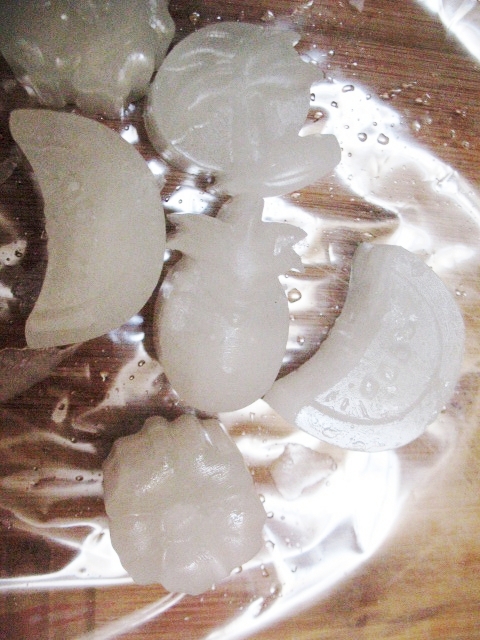
You can see by the deep color of the ice cubes that it was a very strong infusion:

Photobucket - Video and Image Hosting
Fresh! ;^)

—–
*This sage decoction is very, very delicate, I discovered! It must be refrigerated soon after making or, better, preserved. Keep in the fridge only a few days to be safe or you can always freeze, well-sealed, for longer storage, if you don’t have any preservative at the time.  I let mine sit and it went bad in less than 24 hours. Luckily, I made the deodorant soon as it cooled; unfortunately, the rest of the batch had to be trashed. It literally had mold growing on top! The GFSE (grapefruit seed extract), however, has preserved it magnificently.

****************Bonus Deodorant :D *****************

Here is another deodorant I tried that came out truly excellent, as well! The only ingredient I did not have was black pepper essential oil. From what I know about it — which isn’t much — I would think it was merely a fragrance consideration; though, I do not know for sure, as it makes sense it may be anti-bacterial ?
One other slight variation is that I used orange-infused vodka I had on hand (just lots of orange peel sitting for almost 2 years now in a bottle of vodka).

And I wanted to use orange blossom water, which is the food-grade variety, though I’m not sure if the creator of the recipe really meant an orange-flower hydrosol… To be sure, I honestly don’t know if the food-grade is distilled in the same manner as the cosmetic grades (which are oftentimes food-grade as well as cosmetic) because the fragrance is much more pronounced in the orange blossom “waters” I purchase for food than the pure, true hydrosol I’ve gotten… They seem different to me — quite; though the fragrance is familiar, but very-very slight with the hydrosol. The orange blossom water smells much better. I doubt the final product would be the same (fragrance-wise) had I used my orange flower hydrosol.

Anyway, I love the scent of this orange blossom water for deodorant! I recall reading that this can be used alone as a body deodorant; though I thought, at the time, more of a body spray/refresher. Nice! That too. It smells so lovely when sprayed on.  I think I’ll use it in my own deodorant creation next :).

Geranium and Cypress Deodorant

1 tsp high proof vodka
10 drops geranium
10 drops cypress
8 drops bergamot
5 drops neroli
4 drops lavender
3 drops black pepper
4 tb sp (40 ml) witch hazel
2 tb sp (25 ml) cornflower water
2 tb sp (25 ml) orange flower water

1. Measure the vodka into a 4 oz (100 ml) glass bottle with a spray attachment. Carefully add the essential oils, one by one. Shake vigorously to dissolve the essential oils.
2. Pour the witch hazel into the bottle, using a funnel if necessary, followed by the two flower waters. Shake well.
3. Label the bottle and the deodorant is now ready to use .
4. Before you use the deodorant each time, give the bottle a good shake to ensure the essential oils are fully dispersed

By the way, witch hazel — a good-quality like MRH’s — is excellent all by itself as a deodorant! Good stuff.

_Strix

Photobucket - Video and Image Hosting

Interesting Broth…

Well, that’s what I’ve named it ;). A few weeks ago, it occured to me that if sprouted wheat is good for you — it’s called rejuvelac — then would sprouted vegetable seeds? Can you “lac” anything? Hmm…So I decided to lac my broccoli sprouts!

Photobucket - Video and Image Hosting

It actually all started with the desire for some rejuvelac. Normally, I drink tisanes in the mornings; but, other than that, my diet is SO RICH IN NATURAL WATER with all the whole foods that I don’t need water at all. But during summer, I do thirst more and usually like to have teas and lots of ‘ades. I also like cool rejuvelac, straight! Sometimes with stevia and lemon, maybe with some mint leaves or a bit of frozen berries used as ice cubes and to add a bit of flavor. It is naturally tangy, so it’s good plain — well, to rejuvenatics it is ;^D

So I  had been contemplating experimenting with quinoa. I’d not heard of quinoa rejuvelac; then I did a search and, apparently, others have! :D More on that later.

So I soaked a small finger-bunch of the already-sprouted and ready-to-eat broccoli sprouts in  some water and let it sit. It had a *tiny* bit of fizz and began to have a slight “stinky” fragrance at 12 hours! So I didn’t want to let it go any further. I was kinda scared to taste it! Anyway, I did, and it tasted like a very light vegetable broth — no carbonation! Actually, very yummy and it was akin to chicken broth…in a strange way: I conclude it is the smell which contributes this and stimulates the olfactory sense to blend with the flavor, making one “conclude” it’s more chickeny-ish. I think I explained that right. :O I think this would be FABULOUS for raw soups — it would add lots of flavor; whereas, normally simply adding water doesn’t do anything for soups. And it would be especially nice for broth soups, which are rare in the raw-food world. I would just sip this by itself! I used to drink warm veg broth with some fresh daikon, ginger, garlic, green onions; a bit of cayenne; and a 1/2 teaspoon or so of good-quality miso in a mug when a little under the weather or felt a cold coming on or just something warm and light on a cold evening. A very nice veg broth, indeed.

I actually asked SproutPeople about it and they’ve never even heard of such a thing!  So, my own creation :D. Now, I do not know the nutritional value of this; but, I imagine it to be high. Still, if no studies on it have been done, I’m not really sure how MUCH should be consumed. Honestly, I can’t imagine anything bad…I’m also VERY much into fermented foods; they are fabulous for the body.

I did not want to let it go past the 12-hour mark; so I drained it and put it in the fridge. The flavor actually improved over a day and the odor diminished. I’m not sure if the odor was simply from removing the sprouts (probably) or whether the cold broth made it less fragrant. Many foods change upon refrigeration: Garlic, for example, can become more strong after sitting; and some spices can mellow and need to be added again to ‘freshen’ a recipe that’s been sitting.

If I were a raw-foodie ‘cook’ (not ‘kook’ :P ) I’d use this often; however, I never cook! I’m still simple ETL, pretty much raw. Hmm…I guess I could use it in my dressings.

___

Now about that quinoa rejuvelac: I only found a few references to it — Not many at all. So I contacted some folks via their blogs where they were referred to because none had directions! So, I sorta assumed it was basic rejuvelac 101, but, times vary according to seed and grain, so I wanted the 411! No one responded : What’s the deal with people not responding to their blogs?!!?! I mean, what’s the point of having one? Whatevuh…

Well, with no info, I just soaked a bit to see:

Photobucket - Video and Image Hosting

Don’t have a pic of the results but about 2 hours later, the quinoas were plump with water and ready to sprout. Quinoa sprouts very quickly — anywhere from 30-minutes to a couple hours is all it needs to soak; so it’s one of the more convenient grains, requiring draining and rinsing for a couple days only to sprout.

After the sprouting, I added it to some water, as normal. Twenty-four hours later, it was a bit cloudy as most rejuvelacs are; however, I had no idea what it was supposed to be like! Should it be fizzy like other rejuvelacs? It wasn’t. Should it turn clear? What should it taste like? Bitter? Mild? WHAT?!??! So, I took a small sip and it tasted…kinda chalky-starchy, I think. Honestly, I didn’t take a big enough drink. I threw it outgreen big confused

If anyone out there knows how to make this please comment here and let me know!! I’m going to give it another go soon, but any suggestions or shared experiences would be appreciated.

_Pox

Photobucket - Video and Image Hosting

Homemade Hemp Sprout Bags and More

Broccoli Sprouts:

Photobucket - Video and Image Hosting

Homemade Hemp Sprout Bag:

Photobucket - Video and Image Hosting

Photobucket - Video and Image Hosting

Ha! So here is the result of my attempt at making my own hemp sprout bag. After reading how great they are for sprouting from SproutPeople, I just had to try it: They claimed hemp bag sprouting is best for air circulation, drainage — *the* major components to success — travel, ease.
I didn’t want to buy one — why when they are so simple to make? I can use my own materials, and, most important: I want a big one! I made mine 16″ X 14.”

As it is, even though easy, sprouting in mason jars is more work if you have to have multiple jars going at once - they’re not very big…AND,  if you’re a sprout fiend like I’ve become …  No lie - I’m putting about 1/4 lb in my ETL Saladsblue_shock_yikes_eyes) — then it’s not going to be something you’re going to really stick with for long if it becomes a hassle and you have to tend to so many jars. Sprouts last a long time in refrigeration — and, in fact, being that they are living, they will continue to grow VERY slowly in the ol’ fridge. Anyway, I don’t intend for them to store for weeks ;) ).

Oh, speaking of living food, I don’t know if that’s the reason, but my digestion has been incredible with sprouts. It’s almost as if I’m adding digestive enzymes to my dinner!  SOME thin’… I don’t know, but something’s goin’ on with it. Who needs probiotics, flora, or enzymes, blah-blah, Etc?!?!  I prefer vegan kefir and kombucha, anyway (post on that coming soon ;) ) Anyway, things just keep getting better and better.  I stick to ETL 100%  (over 4 years!) — I do my own high-raw version — and continue to strive for the optimal way to eat or as Dr. Fuhrman puts it, “Nutritional Excellence” :D As the ETL journey progresses, it seems, “It can’t possibly get better!” But it DOES. It so does…on so many levels! And no matter what anyone claims, there’s nothing like a 100% ETL diet. Still hard-core after all these yearsblue_lol_rolling…Always.  Okay, I could ramble, but, back to the bag! hold tongue

To start, I had no clue as to what type of fabric to choose with so many available and blends — tried asking some sites which sell sproutbags, and got Zero repliesPhotobucket - Video and Image Hosting. I did some shopping around online and remembered NearSea Naturals, which I forgot I had bookmarked ages ago.

So, which to get??! Well, I hoped for the best and I decided on and used the hemp-organic cotton muslin and made this drawstring bag. This material is VERY easy to work with; (I made Noodles some more eco-suits out of this; it’s perfect and light! I’ll post those soon :D )I made sure to reinforce the seams since, one, this is going to last forever; and, two, it’s going to be getting lots of use! All that water, hanging, etc., would take its toll pretty quickly on a cheapy bag. Loved the cotton-hemp blend, by the way — PERFECT! I’m going to get 100% hemp next time and see how I like that; but this is just perfection. I also want to try a hemp-flax blend…  Soon, soon :D. I also need to order some proper string! I used food-grade, unbleached cotton string I had, but it’s not ideal. I also need to make the band wider; it’s a bit too skinny, even though the string fit perfectly.

I noted that SproutPeople mentioned hemp bags have “exceptional” and “Superior” air circulation and drainage of the sprouters. I have to agree! I also have to agree, that it is THE EASIEST so far; but, as noted it may require an extra rinse or two. So far it *the* best. I’ll have to wait to see how it goes for the winter; but for summertime — yep, I’ve been rinsing at least 3 times on regular days; but usually 4-times a day and sometimes one more (no air-con on) with this 100-degree+ weather here!

Generally, sprouts also grow faster in warm environments; so it makes sense that, that contributes as well.

But, WOW, the results are fabulous. The sprouts grow FASTer — I’m getting ready-to-eat broccoli sprouts in 3 days*; whereas, it’s 4 or 5 in a jar.

*****************

Here is a broccoli seed’s journey with its hempbag, from seed to sprout ;^):

Wet the bag thoroughly, by dipping in a bowl filled with fresh water:
Photobucket - Video and Image Hosting

Add the Seeds:

Photobucket - Video and Image Hosting

Close the bag and leave to soak as required per seed:

Photobucket - Video and Image Hosting

That 1/2 C of broccoli seeds doesn’t look like much in that big bag!
After an 8- to 12-hour soak hang it! That’s it. Hanging it over your sink is easiest — anywhere — and it will be done dripping very quickly too; it’s perfect for on the road, camping, and travel — any-the-heck-where you’re tootin’ off to. The drainage is superb (which is also why it dries quickly and needs TO BE WATERED MORE OFTEN), and the water runs straight through the bag; so give them a good rinse every 8 hours or as needed.
I don’t like to waste water; so I don’t open the bag and then run the faucet over the seeds like SproutPeople recommends — I simply fill a large bowl with fresh water and take them for a thorough dip ;) — just like the above soaking method. (As the seeds grow, obviously, the will need more water to rinse thoroughly each day)

I give it a good swishing and light massage to make sure all the seeds are submerged and nice and rinsed, dip it a few times (like a teabag), and, done! Entire thing takes a minute or less. You don’t need any direct contact with the sprouts at all through the whole process.

Hang it, Baby.

Okay, after only 24 hours…already some sprouts can be seen! Day 1:

Photobucket - Video and Image Hosting

Continue the rinse and draining.

Lookin’ large! Day 2:

Photobucket - Video and Image Hosting

Wow, Day 3* and these can be eaten already!! Or set them out a couple hours to green first :D:

Photobucket - Video and Image Hosting

But I wanted to let them go wuuuuuuuuuuun more day…

EEk! yikes big eyes look up EXPLOSION!!Jour Quatre:

Photobucket - Video and Image Hosting

W_O_W ….

Photobucket - Video and Image Hosting

Major Sproutage! And these have NOT even been officially greened — they’re still in the bag!

Photobucket - Video and Image Hosting

Gorgeous. These were much bigger than just the days’ before; they were also crunchy and crispy!

Photobucket - Video and Image Hosting

The most delicious sprouts EVER. This yielded….

A whopping 1.2 lbs of Sprouts!

Photobucket - Video and Image Hosting

The volume is so HUGE, that, honestly, 1.2 1/4 lbs doesn’t sound right. (These were weighed after spinning dry and the hulls removed)

I stored them in my glassware — they barely fit!Photobucket - Video and Image Hosting
Photobucket - Video and Image Hosting

Sprouts growing in this bag also smell very fresh and clean; you will not smell harsh “broccoli.” Even when I’ve fed the sprouts with the kelp, they never had an odor.

*****
To dehull, Sprout People site has great instructions with photos, plus a method if you don’t have a salad spinner. Be aware you will lose a small amount of sprouts in the final rinse-dehulling; hopefully, less each time!

*****

~ Photobucket - Video and Image Hosting ~

To green, after the final rinse, drain them into a colander (or use the spinner insert), fluff them, and set them in a sunny location, out of direct sunshine, for a couple of hours. I will fluff them up every-so-often to mix, aerate, and loosen those pesky hulls (if any remain from de-hulling OR if you’ve chosen to green before the final de-hulling/rinse); in order that they all get some sun. But that’s not necessary; I just like to do it. I like the window sill, early  morning. Many times, they won’t green to the degree as other times; however, this does not automatically mean they are less nutritious; they may just have less chlorophyll. Greening, really, is not necessary for obtaining benefits from eating sprouts; so don’t sweat it if you don’t or can’t. It’s more important that you rinse, drain, and dry properly for storage. Additionally, as in the photos above in the hemp bag, and jar photos, they green anyway! Sometimes, just natural light in your home or electric light, indirectly, is enough. The sprouts “follow the light” :D.

~ In that vein, I wonder if sprouts absorb Vitamin D or if the amounts are higher in sproutsPhotobucket - Video and Image Hosting? ~

Here are few ways I’ve greened: I put them in a colander and give them some light lots of air to dry. Then I gave them a final spin, just to insure all the water was evaporated.

You can simply use the salad spinner insert to green:

Photobucket - Video and Image Hosting

This is a fine-mesh, which is not ideal, but okay for smaller amounts:

Photobucket - Video and Image Hosting

Here is the ubiquitous steamer insert, which acts as a nice colander; I prefer this to the fine-mesh because of more surface space and bigger holes for air circulation. This or the spinner insert is a better receptacle for greening:

Photobucket - Video and Image Hosting

But the reality is a plain ol’ large bowl will do!

I do make sure they are very dry after the spin/greening.  Then I line a container with a paper towel (or other light cloth or tea towel) to soak up any respiratory moisture the living sprouts will exude — I prefer glass to any other form of storage; and Anchor Hocking my favorite — it’s thick, sturdy with a heavy lid. Then place the sprouts in without squishing them:

Photobucket - Video and Image Hosting

and lay another towel on top (Yes, I just like Photobucket - Video and Image Hosting ):

Photobucket - Video and Image Hosting

Cover and store your three — err — my three or four days’ worth of sprouts (Photobucket - Video and Image Hosting):

Photobucket - Video and Image Hosting

Storing my leafies this way (and in the green bags lined with towels and sometimes in between if a ton of greens) keeps them fresher even longer because they stay drier. The towels soak up all the moisture.

I’ll be putting together — sorta like quilting :) — some towels made from the scraps of leftover hemp fabric to use for layering and storage; the paper towels, even though I do reuse them till they tear, I want to cut down, if not eliminate using them: Paper Towels are HUGE  landfillers :(

Another VERY convenient benefit of the hempbags is its quick-drying properties: in one way, you have to give the sprouts an extra rinse or two per day, BUT when it comes to harvesting, you don’t have to go through a long waiting period or drying period (8-12 hours!) before you can store them. My sprouts dried out fast IN the bag.

I’ve also found, that because the bag gets them nice and dry (but NOT “dried out,” by the way) it help loosen the hulls! So they tend to fall to the bottom of the bag, which makes your rinsing and de-hulling much easier, faster, and much better for conserving water. Remove the sprouts in bunches, give your handful a shake to loosen the hulls so they fall into the bag, instead of dumping them and that will help.
The roomy bag also allows for that great air circulation and it also contributes to giving the sprouts space; so they don’t form those webby, tangle-y, blobby-bunches of hair-like masses! They are loose and this contributes tremendously to ease of removing all those hulls.

One could easily just store them straight out of the sprout bag when dry.
However, if you want to do a final-final rinse, then rinse and use that salad spinner; that’s the way I’ve always washed mine, even the store-bought. It gets them very dry; just give it a few spins till dry to the touch. You can store in those green bags (I always wrap my veggies loosely in paper towels first, or line the bag with them) or in glass, as I prefer. If they are still a bit damp and  you’re not sure, SproutPeople advises to not seal them tight; but, instead, leave it aerated in the fridge or poke holes in the bag they are stored, etc. Then seal when dry. Too much work for me :D I just spin and store!

**

So my large hemp bag, using 1/2 C of Seeds makes at least a 4-day supply; so I don’t need quite that much of additional sprouts I may be adding to my diet, such as the microgreens, clover, buckwheat lettuce, and others. So a smaller bag is order, methinks…

Small Hempbag, 13″ X 9″:

Photobucket - Video and Image Hosting

I’ve got some Red Clover Sprouts in this bag right now (they are especially renowned for benefiting womyn); will update it soon, along with a review of the Biosta Sprouter and its results! Yikes, I’m sooo behind!

***

Now washing and caring for the hemp bag: I rinsed it well, inside out to make sure no seedlings were hiding in the corners, then swooshed it in a bowl of water with a little hydrogen peroxide. Then, (without rinsing it again in water without hydrogen peroxide), let it hang dry. I have to wet the bag next use, anyway, as in step 1; so whatever little hydrogen peroxide that remains on the bag will not be an issue and, in fact, may help: It’s often recommended to clean-rinse the seeds with a hydrogen peroxide solution before even soaking to avoid contamination

This is a MUST if using non-organic seeds…

which no one should be using anyway( tongue_tease).

It’s better than the bleach the industry uses! OR, I should say used to use…but, frankly, why would I even wonder… This was just another reason to avoid buying even organic from stores: They were/are? compelled — The HACCP Plan (FDA) requires soaking seed in a bleach solution so strong it needed EPA approval — to de-contaminate (and pollute) with bleach! fiery_angry_mad No thanks…I think that is — at least partly why, even of the most delicious store-bought sprouts I’ve eaten, MINE ARE SUPERIOR … AND veganically grown! green cutie cheeks. I honestly don’t know if bleacing is still the standard or if it has changed (if anyone reading knows, please comment and inform me!) I’ll take the safest route, myself!

I’ll probably do a soap wash and hydrogen peroxide + vinegar rinse every few uses, with the hydrogen-peroxide rinses in between. I use the vinegar+hydrogen peroxide to disinfect all my produce instead of purchasing unnecessary and expensive veggie washes; and it’s great for disinfecting any thing or place - cutting boards! counters, knobs, etc - around the house. Just make sure to do as the link instructs and don’t mix the two!

Here’s the clean bag, hanging dry over my paper towel rack lol green letters:

Photobucket - Video and Image Hosting

Dries ridiculously fast.

****

If you are concerned with sprouts and seed contamination and bacteria, etc. — firstly, you should buy your seeds from a reputable merchant or from a place/farmer you trust; and you should be buying only organically grown seeds (OH, if only I could get my hands on veganically grown!). Back to contamination — some people worry about it, molding, bacteria, etc. Take basic precautionary measures such as having clean hands; clean tools; avoid touching the sprouts (with the bag, I don’t even open it the entire process!); and use fresh, good-quality water, each soak and rinse; and make sure to rinse well and drain well and often!

You may also like to add some 3% hydrogen peroxide to the rinse water a couple times or at the start and the final rinse for assurance.

I’ve used the following seeds so far, and they’ve all sprouted well in the hemp bag, jars, and cheesecloth method:

Handy Pantry Organic Seeds

Mountain Rose Herbs Organic Sprouting Seeds

*****

Just a word about automatic sprouters — having researched all types and brands, I think the best would be the Easy Green It would cost me $179 + $29.95 shipping. Don’t want or need one at this time (the hempbag is soooo easy). I think, if for some reason it becomes impossible, time-wise, for me to rinse and drain properly, I’ll go with that one. I have actually ordered the FreshLife Sprouter (and returned it!) when if first came out, years ago, and NEVER again… Bad — I mean, bad – service, number one; and too many drawbacks from what I’ve inferred about its mechanics and from the reviews I’ve read.

Now, I still have yet to try chia and flax microgreens in the hemp bag! My first time was good, but not necessarily the easiest!Photobucket - Video and Image Hosting One of preferred ways is to grow mucilaginous seeds, such as flax and chia, is in or on terra cotta/clay pots (like chia pets!) More on clay later.  Too bad the buckwheat lettuce I grew (SO incredibly delicious! Gotta have ‘em — Gotta.) in soil can’t be grown in a sprout bag; it needs a medium in which to dig its roots. However, I started them (pre-sprouted them) on cheesecloth that time; now I can use the sprout bag for that :D! Much easier, a time saver, and a big space saver! Will be trying the baby blanket and vermiculite, though…I just “have to.” ;)

********

I adore the hemp bag method!Photobucket - Video and Image Hosting It is _hands down_ the cleanest, best-producing — everythingy — way to sprout.
Obviously, not everyone eats as many green leafies and now sprouts as moi and so don’t need a huge sprout bagPhotobucket - Video and Image Hosting; but, if you can sew a semi-straight line, it’s SO doably easy-peasy to make your own! Or, you can always buy the standard hemp sprout bags available all over the web.

*Studies show that 3-day broccoli sprouts are the most powerful for certain circumstances — more than plants sprouted longer.

Mmmmmmmmmm...

Photobucket - Video and Image Hosting

Sprouts!
Photobucket - Video and Image Hosting
_Pox

Photobucket - Video and Image Hosting

Biosta Sprouter Review

Okay, I got mixed results; I’m not happy with itPhotobucket - Video and Image Hosting

It all started well enough…

No need to soak — that’s good — just place 1 Tablespoon of small seeds of choice (or 3 TB for larger seeds, such as bean) into each tray; stack them atop the bottom bowl catcher; and pour the pint of water into the top tray only:

Photobucket - Video and Image Hosting

Water pours slowly through the filter (red) steadily into tray below, watering those seeds, then into the third tray, emptying into the bottom catcher (discard that water when done filtering):

Photobucket - Video and Image Hosting

Here they are on Day 3; By this time, I was worried because it’s barely noticeable that they’re okay. The nice foggy ‘green house’ is hopeful:

Photobucket - Video and Image Hosting

Whew. Day 4 — looking good:

Photobucket - Video and Image Hosting

Photobucket - Video and Image Hosting

…and it’s time to water again (only requires watering twice — days 1 and 4); same procedure — top compartment only. I used some kelp this time:

Photobucket - Video and Image Hosting

Photobucket - Video and Image Hosting

Nicely flowing into the next tray:

Photobucket - Video and Image Hosting

Yikes! It can get stuck! It may clog at the filter and stop flowing; so it needs to be watched or the seeds will drown:

Photobucket - Video and Image Hosting

You have to wiggle ‘n’ twist the little red knob which is the filter, to get it moving again…okay, now it’s dripping:

Photobucket - Video and Image Hosting

Day 5!! Awesome looking…

Photobucket - Video and Image Hosting

Photobucket - Video and Image Hosting

Photobucket - Video and Image Hosting

Photobucket - Video and Image Hosting

But it’s short-lived: Upon lifting the lids…

Photobucket - Video and Image Hosting

ICK!

Photobucket - Video and Image Hosting

Those black thingys are not makin’ me happy…

Photobucket - Video and Image Hosting

Now, the visibly moldy sprouts were in the third layer compartment (bottom one); so, perhaps the top two…

Photobucket - Video and Image Hosting

YES!

They look great…

Photobucket - Video and Image Hosting

So I decided to green those anyway (I love how they grow toward the sunshine!) …

Photobucket - Video and Image Hosting

BUT, you know, I just didn’t feel right…so I chucked ‘em :(. I didn’t trust that they were okay. Granted, I’m a bit leary from propoganda against alfalfa (of which clovers are a family member); but I always say, “WHEN in doubt, throw it out!”

I read that this happened to some of the dissatisfied consumers who reviewed the Biosta. I do think, however, that it’s possible the kelp may have contributed — not sure; with the 3 days of no fresh air, all the moisture in that atmosphere… I may give it another go…sometime. Perhaps winter.  I did clean and sanitize the container and all the parts before I started; so, I doubt that was an issue. If I attempt it again, I’ll try it without the kelp and see what happens.
Frankly, I’m not thrilled with sprouting — or doing ANYthing — on or in plastic; so, I’ll probably not use this either way.
To the donation bin! Most likely :)

Pox

Photobucket - Video and Image Hosting

DHA, EPA, Omega 3’s and Reviews of Vegan Sources…

Nerve cells of a healthy brain

_Nerve Cells of a healthy brain_U.S. News

I think everyone knows the necessity of Omega 3’s nowadays — it’s all over the “media.” Unfortunately, the status quo is still “fish or fish oils.” One can get DHA from plant foods which the body will convert to the needed EPA — that’s how the fish get it: they eat sea plants and their bodies convert it to EPA — and, as Bogie might say, “why doesn’t everyone just make their own?;) Who wants second-hand nutrients? Not I, said she.   ~Shudder~   Walnuts; Hemp Seeds/Nuts; Flax (in moderation); and, of course that POWER-house seed that contains *the* highest of any food, the CHIA :D (aka “Salba”) –All raw, contain lots of DHA, ready to be converted by your incredibly resilient host. Not to mention, all leafy greens; and, if you’re getting your greens on (like you should, via Green Smoothies), you’re SO golden…or Greenen ;^) –  Purslane, being the highest leafy green source of Omega 3’s, with Mache in second place.

However, it has to be noted that oils are NOT good sources, nor are they healthful. Flax oil doesn’t convert well, according to the Flax Council of Canada, for example; and I’ve read elsewhere is only converted anywhere from 2-15%! Dr. Fuhrman is also no fan of oils, especially, flax:

“…I do not recommend the use of flaxseed oil or flaxseed oil supplements. Flaxseed oil is pure fat and virtually devoid of all or most of the nutrients (except for vitamin E) found in ground flaxseed. Also, flaxseed oil is a polyunsaturated fatty acid (PUFA), and there is evidence that extracted PUFA oils may suppress the immune system, and possibly increase the growth rate of certain cancers and/or tumors. If you want the benefit of flaxseed, eat the ground seeds and avoid the oil.” _ Disease Proof

And even flax SEEDS should be taken with caution:

“Flax seeds have beneficial health properties in moderate quantity.  Excess omega-3 from flax is linked to increase risk of prostate cancer and flax seeds have a cyanogenic glucoside that blocks iodine uptake.  So they could worsen and iodine deficiency if intake is borderline low.“_Dr. Fuhrman quote from his Forum.

Can Flaxseed Oil Cause Prostate Cancer? Disease Proof

“Keep in mind that the scientifically documented benefits from flax seeds come from raw, ground flax seed, not flax seed oil.”  _ Exerption, Disease-Proof Your Child

Chugging oil (and flaxoil, Aye…) is not healthful. In fact, even flax SEEDS should be limited 1 Tablespoon per day is enough).

I have given up flax as a daily supplement (if something I make calls for it –  unlikely — or something I eat has it, I won’t protest) and choose Chia seeds, which are superior anyway. (Chias may be eaten as desired; no cautions with those gems!)

Whole food sources are always better, but, again, it’s cautionary as to how one would do this. An excess of fat sources — even good fats like avos, walnuts, etc. — will become unhealthful amounts at some point. Now, many people have a medical need, or a physical/emotional need for more DHA; as well, a minority just don’t convert the DHA well for some reason. Then a good-quality supplement is desirable — AND, thankfully, veganically available! I’ll start with DHA PURITY, which is one of the highest-quality I know (or trust):

“This veggie derived DHA, sourced from microalgae, provides the beneficial omega–3 fatty acid of fish oil without the fish. DHA Purity now comes in an all–new, purified liquid form of very highly concentrated DHA so that it can be digested easier and hidden easily in food…”

With DHA PURITY, you get 175 mg of DHA. This will cost you about $30 for a 60-day supply — that’s a good deal — about $27 if you’re a member.

*****

Next, the V-PURE from Water4Life is also excellent